
Spotlight on: Coffee Afrik
Who are we speaking to today?
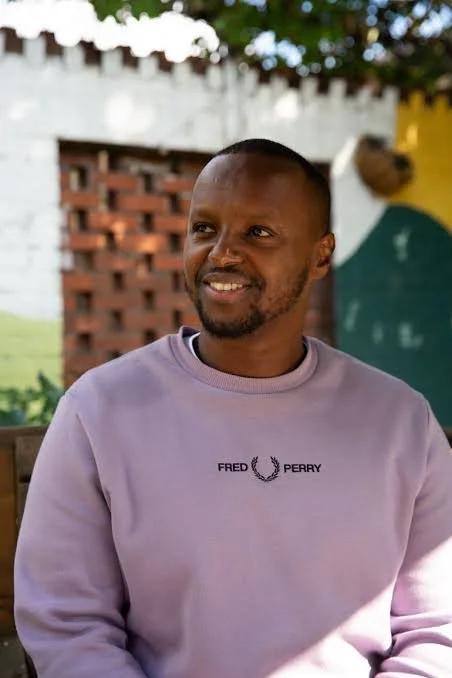
Abdirahim Hassan, Founder of Coffee Afrik CIC.
I’m Abdirahim Hassan, Founder of Coffee Afrik CIC. I’m Somali, an East Londoner and a community organiser. My leadership has been shaped much more by community than institutions by aunties, elders, young people, Black feminist thought, Islam, lived experience and the neighbourhoods that raised me. I believe deeply that communities carry knowledge that institutions have historically overlooked, extracted from or failed to recognise.
For me, leadership is an amanah. It is not about becoming the most powerful person in the room; it is about asking how power, resources, relationships and opportunities can move through you and reach others.
In one sentence, can you tell us what Coffee Afrik is?
Coffee Afrik is a Black-founded movement building community-owned infrastructure across 34 interconnected projects and nine hubs, working alongside young people, women and communities to move beyond simply accessing services towards holding power, resources, knowledge, ownership and the freedom to define what flourishing looks like for themselves.
How did Coffee Afrik begin?
Coffee Afrik began in 2018 with something that institutions often underestimate; relationship and listening. We were surrounded by communities with extraordinary knowledge, creativity, survival strategies and leadership, but much of the language used about our communities was rooted in deficit.
People were described through poverty, violence, poor health, unemployment or “vulnerability,” while much less attention was paid to the structural conditions that produced inequality or to the wisdom communities already carried about what needed to change.
We didn't want to reproduce a model where an organisation arrives, consults people, writes a strategy somewhere else and then returns with a service. We wanted communities to be knowledge-holders, decision-makers and eventually owners.
That small beginning has now grown into 34 projects and nine community hubs, spanning youth power, women’s leadership, health justice, violence prevention, harm reduction, community research, fatherhood, land and growing, community organising and new forms of governance.
But the principle underneath everything remains quite simple; our communities are not problems waiting to be solved. When resources, trust and decision-making move closer to communities, people are extraordinarily capable of building the conditions for their own liberation.
We’ve seen the stats and the reach Coffee Afrik has achieved. What has been your biggest milestone this year?
There have been many beautiful moments, but I think our biggest milestone has been moving from talking about redistribution to building the infrastructure for it. Coffee Afrik is now the Lead Partner for our Solidarity Fund partnership, which is allowing us to think much more deeply about what funding could look like when it moves beyond transactional grant-making.
For us, solidarity cannot mean Coffee Afrik becoming bigger while everyone around us remains under-resourced. We are interested in what happens when money, relationships, knowledge, decision-making and institutional access circulate across an ecosystem.
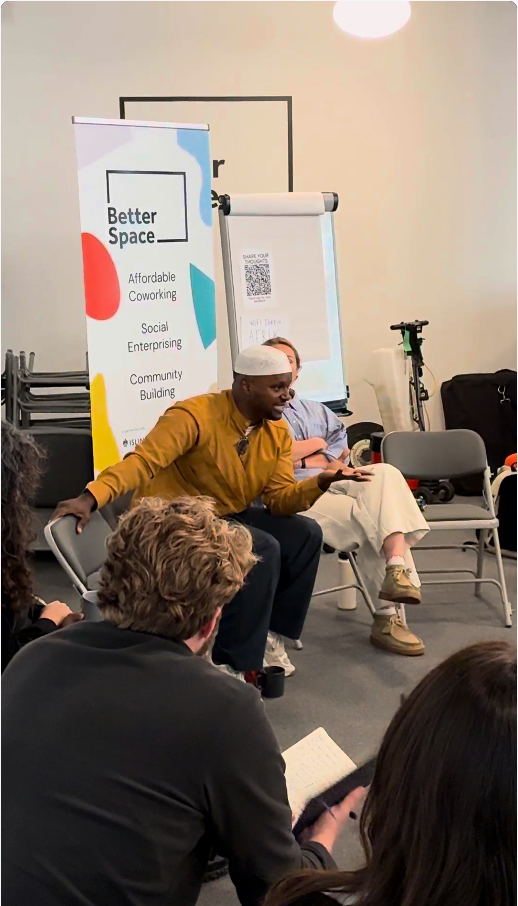
Lunch & Learn: Community organising, Co-production, and Regenerative governance with Abdirahim Hassan
We are building approaches where communities help define success, accountability travels in more than one direction, learning belongs to the people who produce it, and organisations have the space to build for the long term rather than constantly surviving one funding cycle at a time. Alongside that, one of the things I am proudest of is actually giving organisational power away.
After years of political education, relationship-building and leadership development through our Hackney Women’s Hub, we supported the women themselves to establish independent community infrastructure. Rather than Coffee Afrik holding onto ownership because something was successful, we began transferring power and stewardship.
That is important to me because decolonial leadership cannot simply mean replacing who sits at the top of existing structures. We also have to question the structure itself. Sometimes the greatest evidence of our success is not how much Coffee Afrik owns, but how much power we have helped other people to hold without us.
How can people and the wider community support Coffee Afrik?
First, come into relationship with us. Not every relationship needs to begin with a project, transaction or funding opportunity. Some of the strongest things we have built started with people sitting together, sharing knowledge and asking what they could contribute to one another.
If you have resources, circulate them. If you have access, open the door wider. If you hold knowledge, share it. If you have relationships that could strengthen somebody else's work, make the introduction.
And if you are a funder or institution, invest in Black-led and community-led infrastructure with trust rather than surveillance. Communities should not have to continuously narrate their pain or prove their deprivation in order to become worthy of resources. Support Coffee Afrik, absolutely, but also support the organisations, young leaders, aunties, community researchers and movements growing around us.
Our ambition isn't to build one powerful organisation surrounded by scarcity. We want an ecosystem where power and resources circulate and where many organisations and communities can flourish.
How can people get in touch with you?
People can connect with Coffee Afrik through our website, social media, our hubs or directly by email. But I would also say; come and see us. Sit with the young people. Spend time in the hubs. Visit the community garden. Meet the aunties and our colleagues. Relationships feel very different when they are built around a table rather than through an organisational profile.
We are always open to relationships with people who share a commitment to justice, care, community power and imagining something beyond the systems we have inherited.